

Development and evolution of mammal vertebral diversity
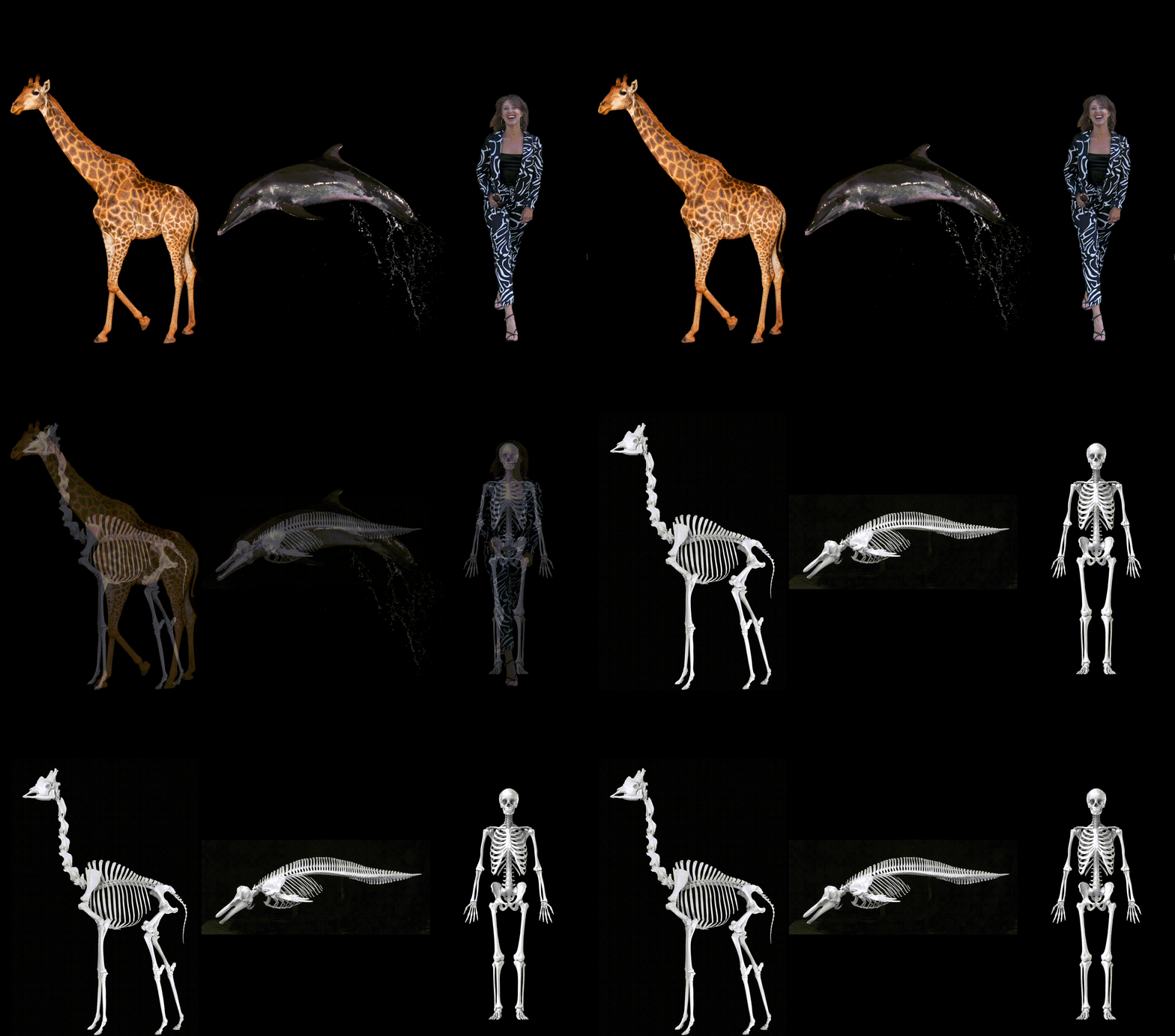
Humans, dolphins, and giraffes all have seven cervical vertebrae but vastly different neck lengths.
How do individual vertebrae acquire distinct size and shape, and how does this variation evolve?
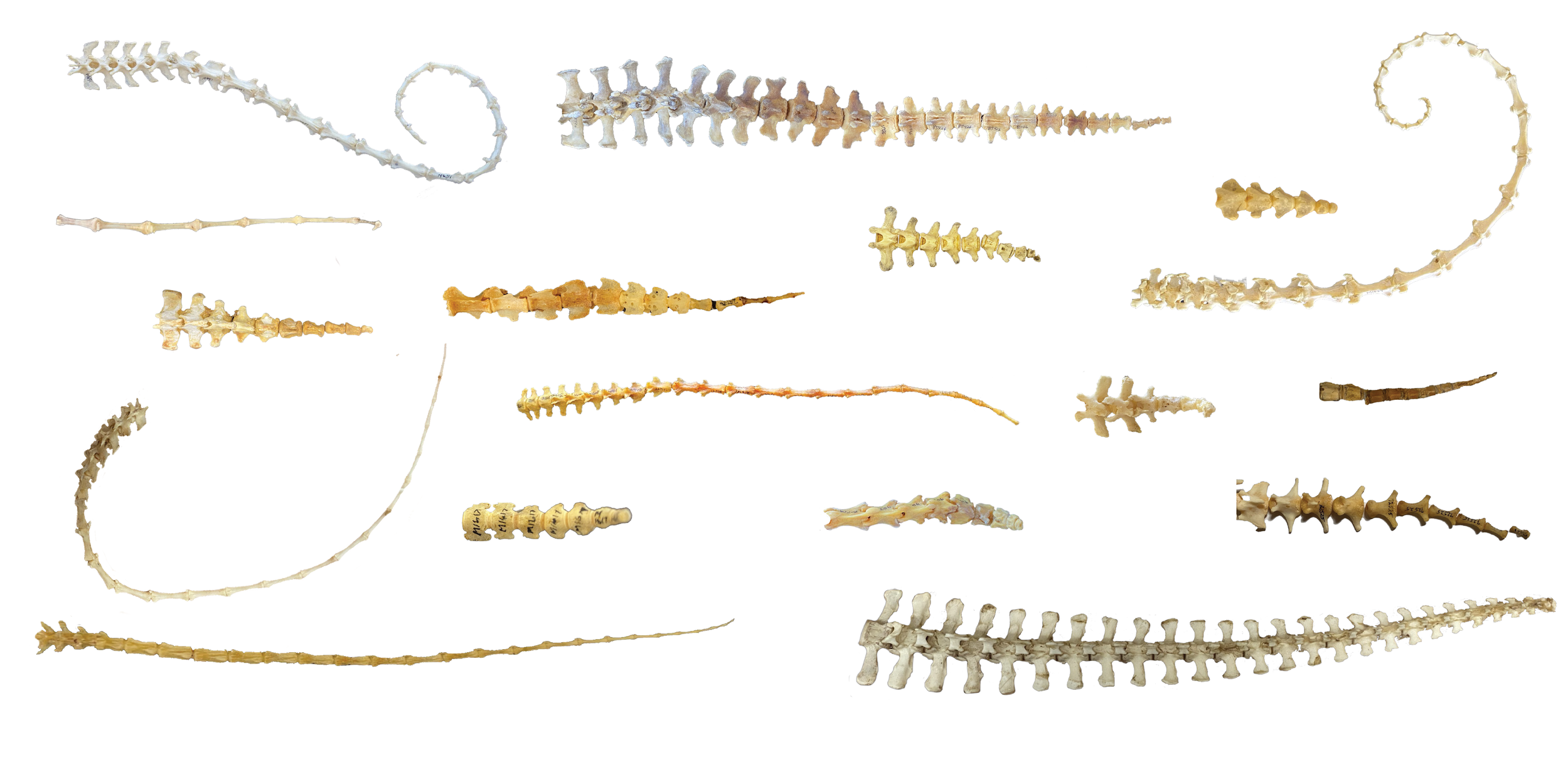
The tail is the most morphologically and functionally diverse region of the mammal axial skeleton
The tail serves remarkably different purposes across mammals, from providing balance, propelling swimmers, grasping branches, or signaling to other individuals, depending on the species. Comparative studies show that the shape of the proximal tail vertebrae correlates strongly with both how the tail is used and how long it is. Because of this tight link between form and function, we use the mammalian tail as a tractable model system for investigating what drives differences in vertebral size and shape, both within a single region of shared developmental identity, and across species.